Q: What first brought you to tennis, and what has kept you connected to the game?
A: I first came to tennis in 2005 when I joined USTA NorCal as Assistant to the Director of Diversity & Inclusion. I wanted to fully immerse myself in the sport, so I began taking lessons at Chabot College and even played on a team. I quickly discovered that tennis was fun, challenging and a little addictive!
More importantly, I began to see how tennis could open doors and create opportunities. That became especially meaningful through my work in diversity and inclusion—connecting the sport with communities that historically had not always had the same access, exposure or sense of belonging in tennis. That mission is what has kept me connected to the game all these years.
Q: How has your Hispanic or Latino heritage shaped your journey in tennis and the way you connect with others?
A: As a Latina, I bring personal experiences and cultural understanding that have helped me recognize some of the challenges faced by multicultural communities in tennis. That perspective allowed me to build authentic relationships with players, parents, coaches and community leaders.
Sometimes connection begins with something as simple as understanding someone’s culture, speaking their language or recognizing an experience they have had. I have always tried to be someone people felt comfortable approaching and someone who would help them find a way forward.
Q: What does representation in tennis mean to you, especially for young Hispanic and Latino players and families?
A: Representation means being able to see yourself in the sport and knowing that you belong there. Shared backgrounds and experiences can create an important foundation for trust, connection and allyship.
I remember receiving phone calls from Spanish-speaking parents who had questions that sometimes went well beyond our department’s work—about tournaments, rules or how to navigate the tennis system. They called because they knew there was someone who would listen, understand and do her best to help them find the answer.
That has always stayed with me. Representation isn’t only about who we see on the court; it’s also about who is there to welcome you, advocate for you and help you navigate the path.
Q: What impact do you hope to make through tennis, both on and beyond the court?
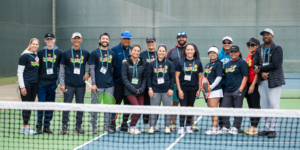
A: I hope that my years with USTA NorCal have helped remove some of the barriers to entering and staying in the sport. Whether through scholarships, camps, educational opportunities, community programs or simply connecting someone with the right resource, I hope I have helped people feel that tennis is a place where they belong.
I also hope we have empowered the people who participated in our programs to become advocates themselves. Today’s participants can become tomorrow’s coaches, volunteers, industry leaders and lifelong players and fans. That’s how we continue to grow the game and make it more representative of the communities we serve.
Q: What barriers have you seen Hispanic and Latino families face in accessing tennis, and what can we do to help create more opportunities?
A: There are still several barriers. One of the biggest, especially when I first began working at USTA NorCal, was the image of tennis itself. It’s difficult to see yourself in a sport if you perceive it as being only for wealthy families or for people who don’t look like you.
I experienced a small example of this myself in high school. During PE, we were playing soccer when I noticed another group of students playing tennis. I asked the teacher if we could play tennis too, but my request was brushed aside, and our group—primarily Latino students—continued with soccer and flag football. It may seem like a small moment, but exposure matters. Sometimes simply being given the opportunity to try a sport can change someone’s path.
Cost is another significant barrier, particularly for families pursuing competitive tennis. Equipment, coaching, court time, travel and tournament expenses add up quickly. Programs such as grants, scholarships and camps can help, but there is still more work to do.
Creating opportunities means bringing tennis directly into communities, making programs affordable and accessible, and ensuring that families can see a clear pathway from their first experience with a racquet to wherever they want the sport to take them.
Q: Is there a moment when you realized your involvement in tennis was making a difference in someone else’s life?
A: Definitely. Some of the most meaningful moments have come from young people who received college scholarships or had the opportunity to attend summer tennis camps through programs we supported.
Over the years, I received emails, cards and updates from students telling me about school, tennis and what they were doing next. Parents would sometimes see me at an event and tell me how much an opportunity had meant to their child or family. One college scholarship recipient even sent me a small holiday gift as a thank-you.
Those moments reminded me that what may look like a program, scholarship or camp on paper can represent something much bigger to the person receiving the opportunity. That’s when you know the work is making a difference.
Q: Who has inspired you along the way, whether in tennis, your family, or your community?
A: I’ve been very fortunate throughout my life to have mentors, colleagues, friends and family members who have taught me, encouraged me and challenged me to grow. I’ve also been inspired by the people I’ve met through this work—the parents advocating for their children, coaches giving their time, volunteers serving their communities and young people pursuing opportunities that may not always have seemed accessible to them.
I’ve learned that inspiration doesn’t always come from one person. Often, it comes from the community you build around you.
Q: What advice would you give to the next generation of Hispanic and Latino players, coaches, and leaders in tennis?
A: If you dream of being part of the tennis community—as a player, coach, volunteer, official or leader—there is a place for you here. You belong.
Don’t be afraid to enter spaces where you may not immediately see people who look like you or share your background. Ask questions, seek out mentors, build relationships and take advantage of opportunities. And when you find your place, help open the door a little wider for the person coming behind you.
Q: When you think about the future of tennis, what would you most like to see for the Hispanic and Latino community?
A: I would love to see the Hispanic and Latino community even more engaged in tennis and to see the sport become something families embrace together—not just as a competitive pathway, but as a lifelong family and community sport.
I would also love to see more Hispanic and Latino players rising through every level of competition, more coaches and leaders shaping the game, and greater representation throughout the tennis industry.
Ultimately, I want the next generation to look at tennis and not have to wonder whether there is a place for them. I want them to know there is.