Q: What first brought you to tennis, and what has kept you connected to the game?
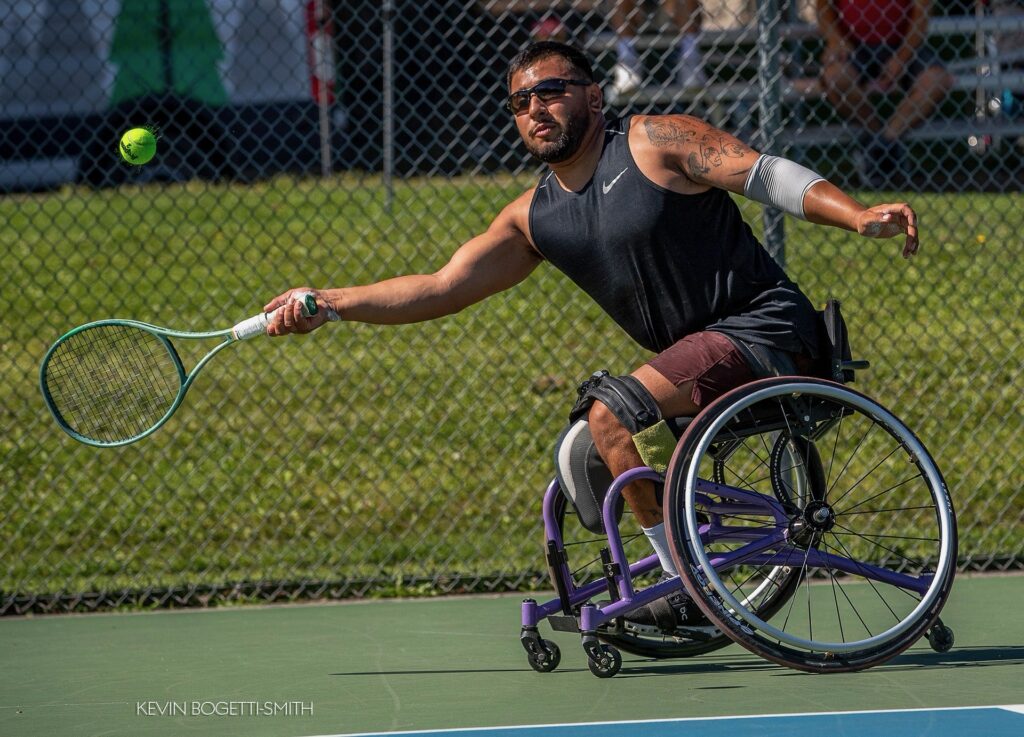
A: I picked tennis up in high school, since my friends were on the team. I fell in love with it right away, and I still do. What has kept me playing so long is the challenge it provides and confidence that comes from seeing yourself improve. Tennis really works your mind and your body, and it leaves you feeling accomplished. Also, all the people I have met, both as an able-bodied player and now as a wheelchair player, is a huge reason why I’ve stayed connected to the game. To this day, most of my friends come from tennis.
Q: How has your Hispanic or Latino heritage shaped your journey in tennis and the way you connect with others?
A: My Latino heritage has played an interesting role in my tennis journey. The longer I play, and the more places I go, the more I see tennis players that look like me. It is great being able to share a bond with people of similar backgrounds, especially when tennis is not the typical sport for Latinos. As my travels for tennis have expanded, I have been exposed to more cultures that I am interested in, and I’ve also been able to share my experiences as a Latino to players who might not be around Latinos often.
Q: What does representation in tennis mean to you, especially for young Hispanic and Latino players and families?
A: Representation is so important when it comes to feeling like you belong somewhere, and I am so happy that tennis is growing within our community. I am really proud to be Latino, and I love being able to share that part of me, especially with Latino juniors, and even more so with disabled, Latino juniors! Being Latino and being disabled in tennis are each small fractions of the whole tennis population. Giving juniors and families a chance to see what’s possible and pick my brain is an honor.
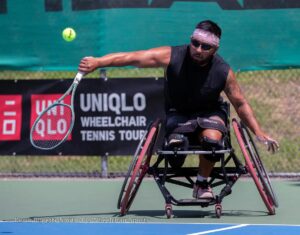
Q: What impact do you hope to make through tennis, both on and beyond the court?
A: I hope to climb the world rankings and provide Latinos with someone to root for. I want to inspire others, both able-bodied and disabled players. If I can get more people out playing, then this is all worthwhile. I hope to serve as a role model and share information, especially about wheelchair tennis and opportunities that are available, such a college scholarships.
Q: What barriers have you seen Hispanic and Latino families face in accessing tennis, and what can we do to help create more opportunities?
A: The biggest barriers I’ve seen in Hispanic and Latino families in accessing tennis is cost. Tennis rackets, coaching, and court time can all be expensive. On average, these households make less than other ethnicities. Some places require court reservations for public courts, so scarcity can be an issue. Transportation to courts can be an issue for many families. Equipment, and especially a coach, can also be expensive. There are also stigmas attached to tennis, which can make Latino kids not want to try it. What we can help with is providing court time, group coaching, and loaner equipment in areas where tennis is not easily accessible.
Q: Is there a moment when you realized your involvement in tennis was making a difference in someone else’s life?
A: I think this came more from wheelchair tennis. Seeing juniors that look up to me and that I can see myself in, really motivates me and keeps me going. Whatever hope or excitement I can give to players is such a bonus to an already amazing tennis journey I’ve had.
Q: Who has inspired you along the way, whether in tennis, your family, or your community?
A: Finding a wheelchair tennis community is what really inspired me. Tennis was something I did as a standing player, and now as a wheelchair tennis player. Seeing other people work so hard and achieve amazing heights serves as motivation. There are also a few Latino and Hispanic wheelchair tennis players at the top of the world rankings that inspire me every time I watch them.
Q: What advice would you give to the next generation of Hispanic and Latino players, coaches, and leaders in tennis?
A: I would tell them that they belong. Knowing that is so important, especially when you might not see others that look like you.
Q: When you think about the future of tennis, what would you most like to see for the Hispanic and Latino community?
A: I’d like to see more of us, at every stage. We are great athletes and hard workers who could really showcase our talents in this sport. We can be great coaches and serve as mentors, especially to other Latinos. It is so important to have someone you are comfortable around, and we can help with that. There is so much room for us to grow, and I’m excited for what is to come.