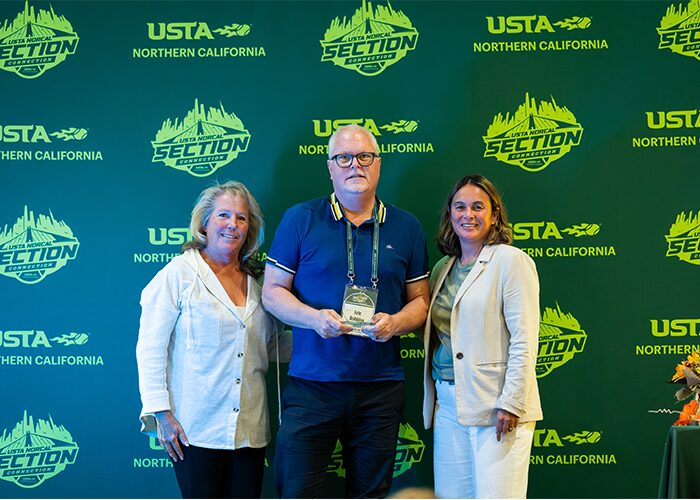
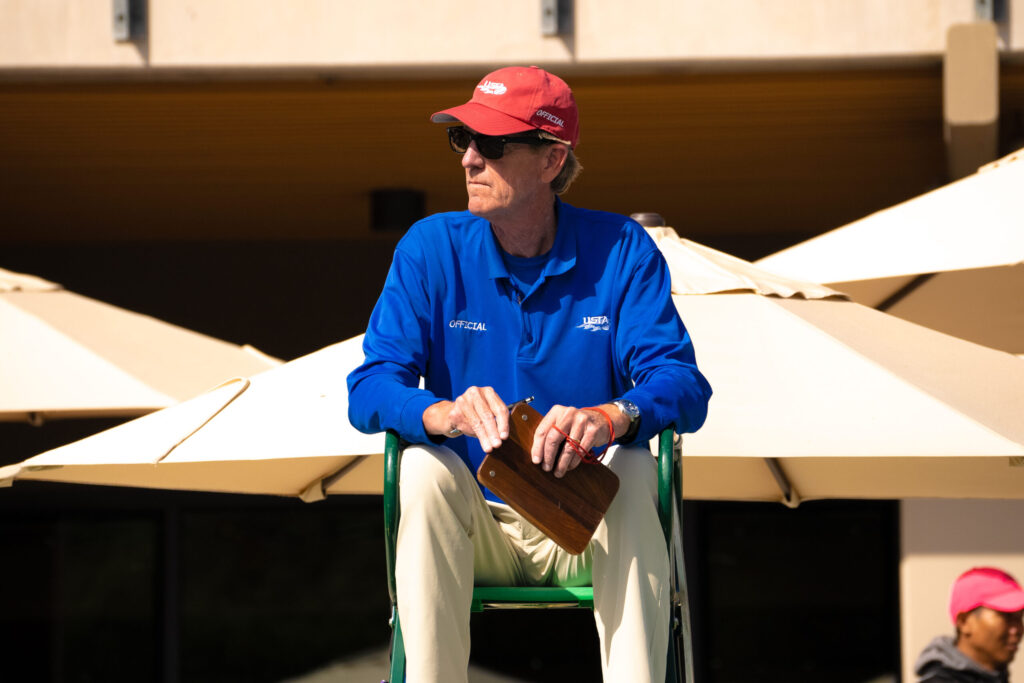
With over two decades of court experience, former Division I basketball athlete turned USTA tennis official Tom McTighe shares the unexpected journey that led him from casual mixed doubles to the iconic courts of Arthur Ashe Stadium at the US Open. Persuaded by persistent mentors to step onto the chair and lines, he has spent 20+ years navigating everything from junior roving assignments and ITA collegiate matches to electronic officiating field staff roles in New York. Below, he reflects on his most memorable moments on the pro circuit, the enduring value of mentorship, and the key lessons that keep him striving for excellence on and off the court.
Q: When did you become an official?
A:First certified as a USTA Official in 2005, so 20+ years now.
Q: What influenced you to become an official?
A: My wife, Laura and I were playing mixed doubles with a couple who were both USTA certified Officials. Some rule questions came up and next thing we know they were encouraging us to consider becoming officials. At first we replied, “No way, we see what you have to put up with.” They did not relent and said we’d be good at it. We went home and it became a discussion. On our plus side was that it would be something we could do together. Carol Kim and Russ Groh took us under their wing to mentor us through the process, giving direction on next steps along the journey. So, on good officiating days we have them to thank and on bad days we have them to blame…fortunately many more good days! 😉
Q: What umpire roles have you worked (i.e. roving umpire, chair umpire, line umpire, referee, ITA, chief umpire)?
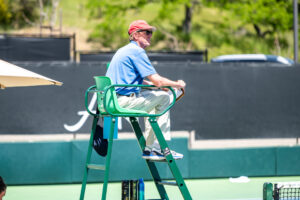
A: The only one I have not worked is as a chief umpire…I’ll leave that role to Laura as I see the time she puts into it. We started off doing a lot of roving at junior tournaments. Carol and Russ got us started at tourneys they were refereeing. Then I accepted a roving assignment at an adult Grand Prix event where Rebel Good was mentoring new chair officials. He asked if anyone working was not doing chairs and I raised my hand. In what I recognize now to be typical Rebel fashion, he said, “we will talk.” Next thing I know, he has me chairing a women’s 3.0 match. Quite sure I butchered things as I had not paid any attention to what chair officials did, including verbiage. But Rebel did me a favor by snatching my “all important” score card and told me to just call the match. This got me to Chair Academy in So Carolina…way too early since I did not know the steps needed to move up the ladder. Plus, I had a job that actually paid our house payment. I have officiated many pro matches, including the US Open starting back in 2010. Now that lines are called electronically, my role in NY has been as Field Staff for the past 6 years.
Q: What was your favorite umpire role and why?
A: ITA is currently my favorite umpire role. Many of the college players are involved in ITF (Pro) tournaments and I see the skill level of these athletes go up every year. I was also honored to chair professional matches at the KPSF Open in San Francisco last year, including the women’s final. Despite the rain delay, it was a great experience with an awesome line crew!
Q: What was your most memorable moment in officiating?
A: My most memorable moment in officiating was my first year at the US Open calling the center line on Arthur Ashe. Started with the Serena match and finished with Federer. The great thing about the center line is you have one call to watch and then you got to stand up and just watch the rest of the point.
Q: What is a fun fact that most officials do not know about you?
A: Fun fact, I played DI college basketball and used to be able to jump high enough to almost hit my head on the rim, emphasis on used to…not sure I could even touch the rim today.
Q: What do you like most about officiating?
A: What I really enjoy about officiating is discussing with other officials how “situations” were handled and might be handled differently. In our role as officials, we are not perfect, but we can strive for our best excellence.
Q: What do you find to be most rewarding about being a tennis official?
A: Most rewarding about officiating has been the journey and the twists and turns it has led to. When I started, I would have never dreamed of being standing on Ashe or being at the US Open officials’ room that sounds like the United Nations with all the blending of languages.
Q: What advice do you have for new officials?
A: Advice to new officials would be to first find a good mentor. Carol and Russ were SO important to Laura and me. Second would be to study the rules and verbiage. I can still hear Carol saying, “The rules are your friend” and this rings true so many times when presented with those sticky situations. Finally, regarding verbiage and what is in line with what is the book, your credibility rises when correct…when it is off, players and coaches notice and trust fades. Study and choose to be solid.